
Today, August 30, is a very special day for Turkish people. One hundred years ago, the armies of the Turkish Grand National Assembly led by Mustafa Kemal (Ataturk) won a decisive victory on the plains of Dumlupinar. This victory eventually led to the liberation of the occupied territories and also the declaration of the Turkish Republic.
In the centennial of this milestone event, I would like to share with you the story of two memorials which were built on the hill that Ataturk had personally commanded the armies. Although there are many monuments, statues, and war cemeteries in and around Dumlupinar, these two monuments are symbolically the most important ones.
After four days of intense battles, which started on 26 August 1922, the Büyük Taarruz “The Great Offensive” concluded with the capture of Supreme Commander Nikolaos Trikopis and significant percentage of his armies. Next day on August 31, Supreme Commander of Turkish Armies, Mustafa Kemal Ataturk examined the battlefield on foot. His attention focused on a martyr, half buried under soil after being killed by a cannon fire. The arm of this unknown martyr stiffened and stood still with a flag rising towards the sky. Ataturk deeply touched with this scene, he wanted to learn the identity of him. After an intensive research, no conclusive information was found. To forever commemorate him, all the other unknown soldiers and also “the devoted and heroic Turkish people”, Ataturk wanted to build a monument which replicates the exact position of this arm and the flag.
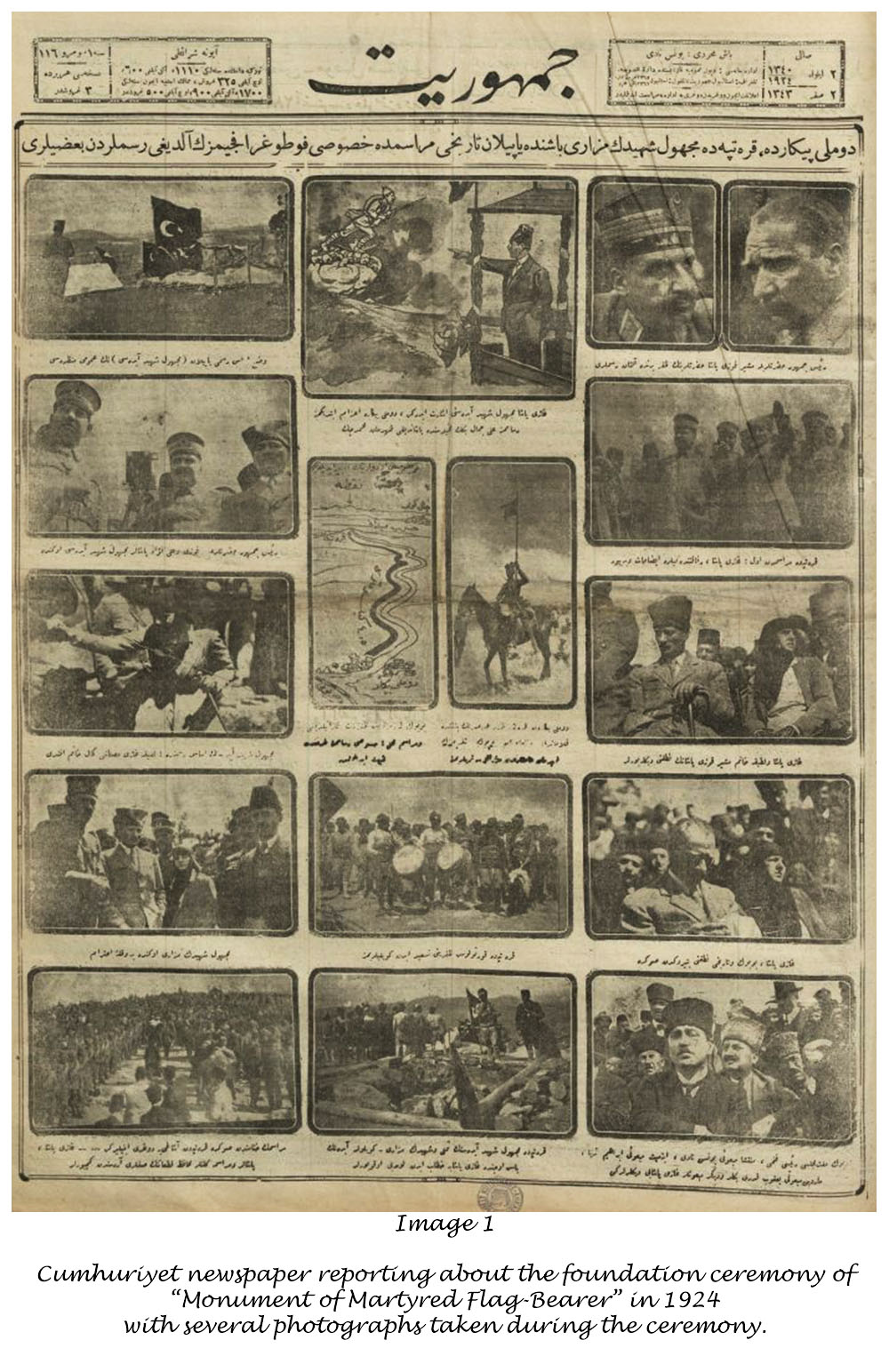
In the 2nd anniversary of the victory, the foundations were laid with a comprehensive ceremony. Ataturk, his wife and all high-ranking statesmen and commanders joined this ceremony. Citizens from various distant cities like Istanbul, Ankara, Izmir, Adana, Konya joined the ceremonies thanks to train services. The veteran ox carts (which played a crucial role in battle logistics) were once again ready for service, but this time to carry citizens from train station to the former battlefield. In addition to 100 ox carts, 15 trucks and 25 cars were also transporting the participants to this distant plain. Ataturk and his wife, Latife Hanım, put the first mortar into the foundations. In the meantime, sacrifices were done according to the Islamic tradition. In an inscription near the foundation a very meaningful sentence was written: “We will not only remember you forever, but also carry your memory in the depth of our hearts.”
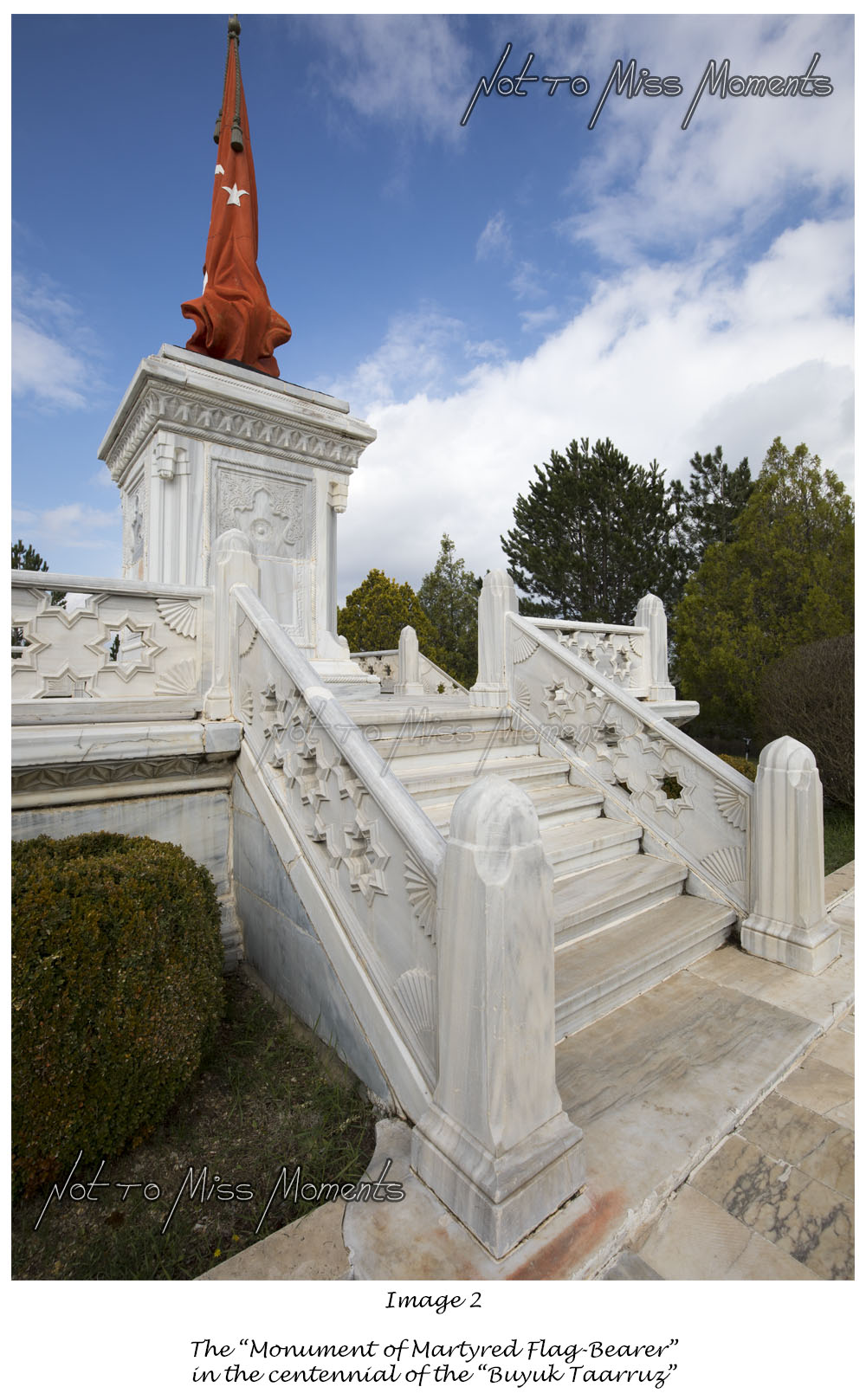
This first monument, named as “Şehit Sancaktar Anıtı” (Monument of Martyred Flag-Bearer), was built between 1924-1927 by Architect Hikmet and Stonecarver İbrahim. Elevated with 8-staired platform, the white marble monument’s focus point is the bronze arm holding the Turkish flag. Four sides of the monument is ornamented with stylized flowers and rumi motifs. Stairs have eight-pointed stars as figurative decorations. In the financially-poor conditions of the initial years of the Republic, the attention given to this monument is admirable.
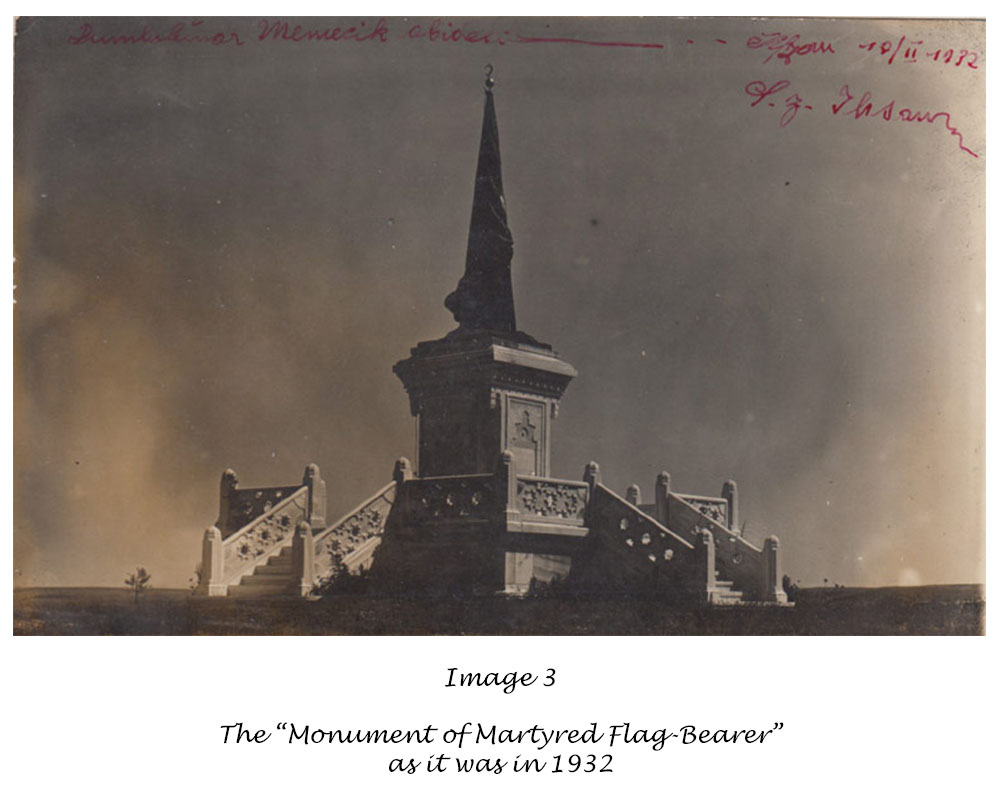
In 1961, a new decision was taken by the parliament to transport the Şehit Sancaktar Monument from the Zafertepe (“Victory Hill”, the hill where Turkish commanders directed the war) to Berberçamı Hill, where Ataturk saw the martyr in 1922. However, this decision couldn’t be executed until 1979, although the monument was demounted into pieces earlier.
In 1962, Turkish parliament also took a decision to build a grander monument on the Victory Hill. As the reasoning of this decision, the official minutes recorded that “existing monument is far from expressing the meaning and spirit of” those events. The official minutes continued as follows: “In the middle of treeless, waterless hill; a marble-staired humble monument without an inscription or an embossment, solely contains a bronze arm holding the flag. However, the humble appearance of this monument hardly ever expresses that it is the actual foundation of the current state of the Turkish Republic. Because with its volume and its appearance from a distance; and the lack of statements or reliefs makes (visitors) feel sad.”
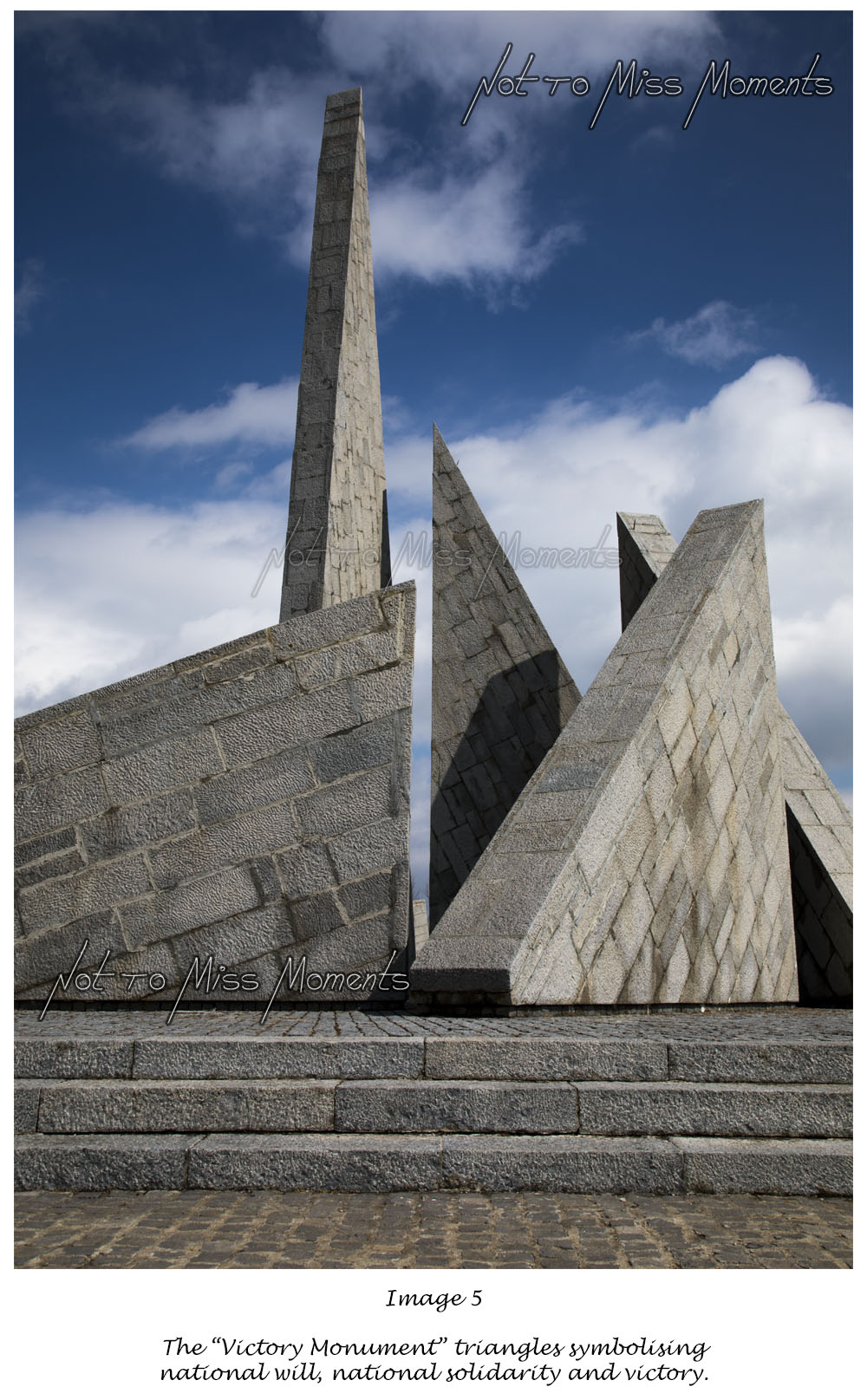
In light of this perspective, after a nation-wide competition, the new monument named “Zafer Anıtı”, the Victory Monument, rose on the Victory Hill in 1964. This new monument was designed by leading architects Levent Aksüt and Yaşar Marulyalı.
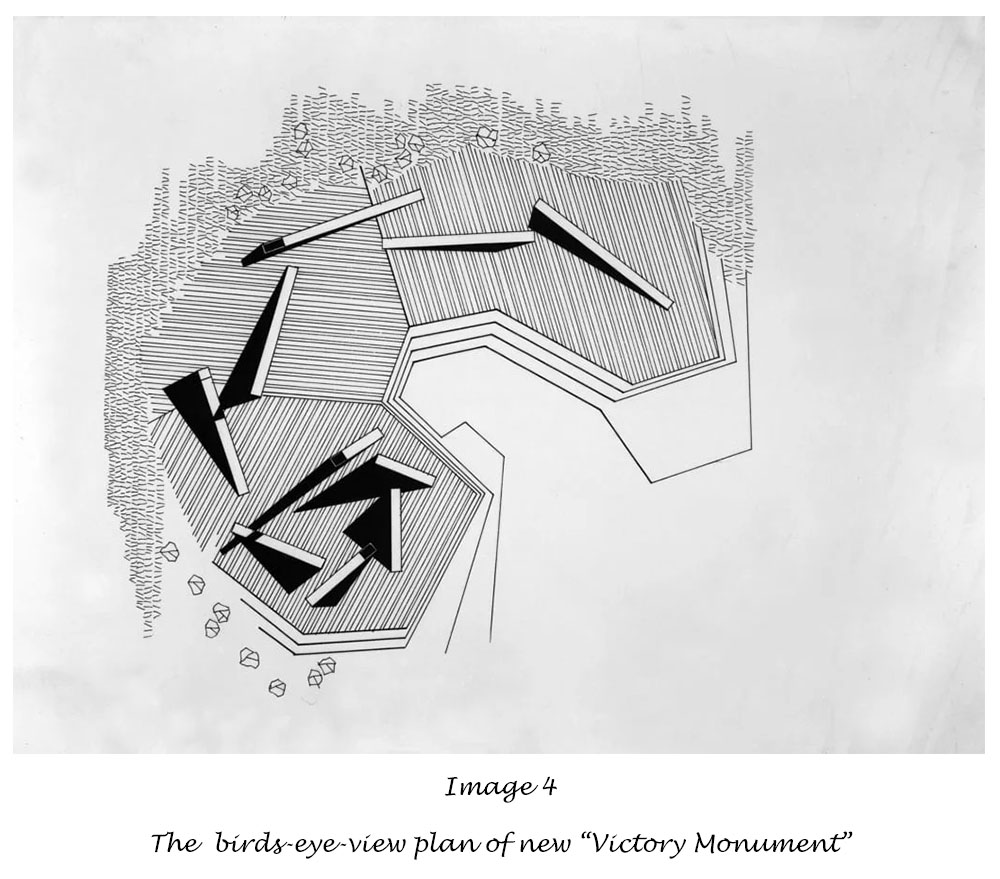
New monument, with a 2000-square-meter area, symbolized different phases of Turkish “Milli Mücadele”, the National Struggle. These phases started with Ataturk’s arrival to the city of Samsun and ended with the victory in Dumlupinar. The reversed triangles represent obstacles stemming from internal and external reasons. The constantly raising triangles, which are also leading to the same direction, represent the national will, national solidarity, and victory. Thanks to the design of the new monument, a visitor has a capacity to view whole of the battlefield. Overall, the whole monument represents the idea that as long as the nation remains united, all opposing forces are destined to fail.
Both monuments, which exist in close proximity with each other, have their own architectural beauty and spiritual meaning. In time, regardless of their size or design, they are decorating a very special piece of land, which is (in the words of Ataturk) “without doubt, the location where the foundations of new Turkish state, the young Republic, was strengthened and its endless life was crowned.” As Ataturk declared during the foundation ceremony in 1924, “the blood of Turkish people which poured over these lands, the souls of our martyrs who are now flying over this sky are the eternal guardians of our state and our republic.”
Today, as we are celebrating the 100th anniversary of this special day, we are commemorating every individual with respect who contributed to the salvation of Turkish people from captivity.
Sources: Ataturk Ansiklopedisi / Yapı Dergisi: Dumlupınar Zafer Anıtı / TBMM Dumlupınar Zafer Abidesinin İnşaası Hakkında Kanun Tasarısı / Dumlupınar’dan Dumlupınar’a Websitesi / Kurtuluşun Diyarı Şehitlik ve Anıtlarıyla Kütahya
Academic Sources: Burhan Sayılır: 30 Ağustos Zafer Bayramı Kanunu, İlk Zafer Kutlaması ve Büyük Taarruz ile İlgili Bazı Bilgiler /
 Not To Miss Moments
Leave a comment