
Turkish baths were central to the daily life of citizens in Turkiye until 1950s. With the abandonment of this tradition, many Turkish baths felt into decay. Some of them turned into shops or depots, while some others left alone with their destiny. Even today, some of the best examples of Turkish baths are closed or in a ruined state.
Thanks to the efforts of The Marmara Group, one of the leading examples of Turkish baths Çinili Hamam (Tiled Hammam) was delightfully restored. Built by the most accomplished architect of the Ottomans, Mimar Sinan, this Hammam was commissioned by the Grand Admiral Barbaros Hayreddin Pasha. Its exact construction dates differs according to various sources, ranging between 1540 to 1550s. Because of its commissioner, Tiled Hammam is also known as “Kaptan Paşa Hamamı”.
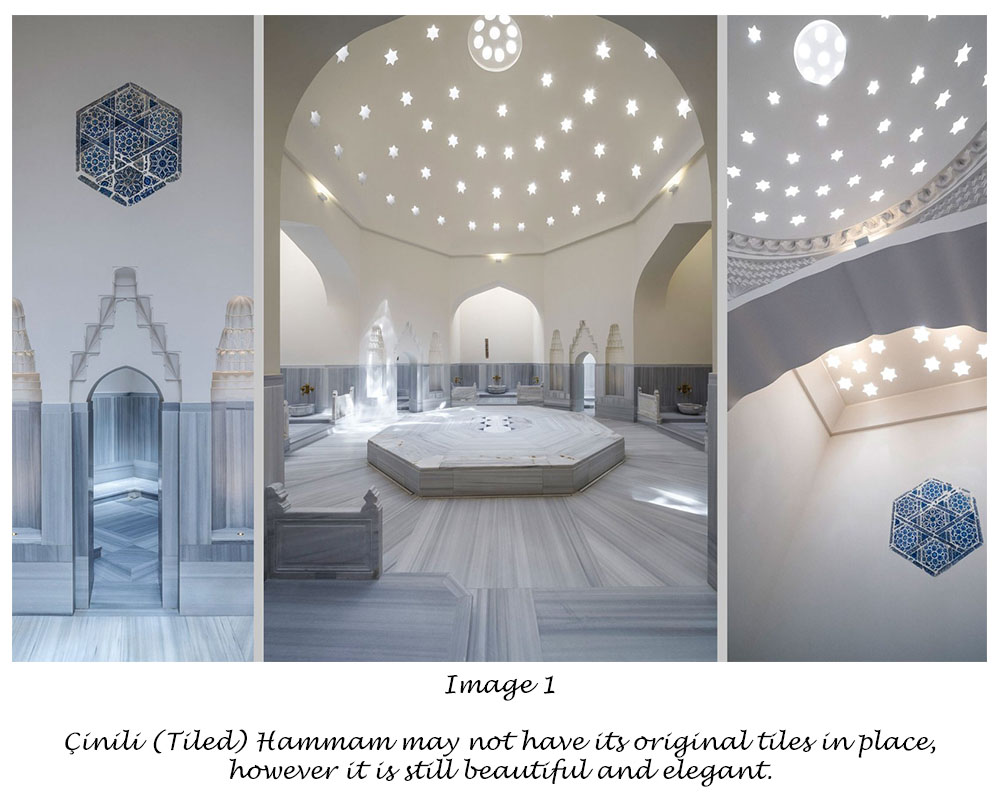
During the Istanbul Biennale, the Hammam will be used as a venue to display artworks of Talio Havini and Renato Leotta. After the Biennale, it will start to refunction as a hammam after decades abandonment. According to the reports, Çinili Hamam once contained 10.000 tiles (1) decorating its inner walls. Because of these decorations, it was one of the most beautiful hammams ever built. However, only very few of these tiles exists today inside the hammam. Some of the good examples are in London’s famous Victoria & Albert Museum. Some excavated tiles will be exhibited separately in a new museum. The new museum will be a place not only to explain hammam culture and traditions, but also to display additional finds from Byzantine, Roman and Ottoman periods.
Çinili Hammam has a dual-hamam structure, which means two separate sections for men and women united under one building. In the entry of men’s section, there was a single-block pool with four sprinklers on four sides. According to some academics, this pool was a gift of a Persian Shah. Another important feature of this Hammam are the kalemişi (penwork) decorations made after 1850 restorations.
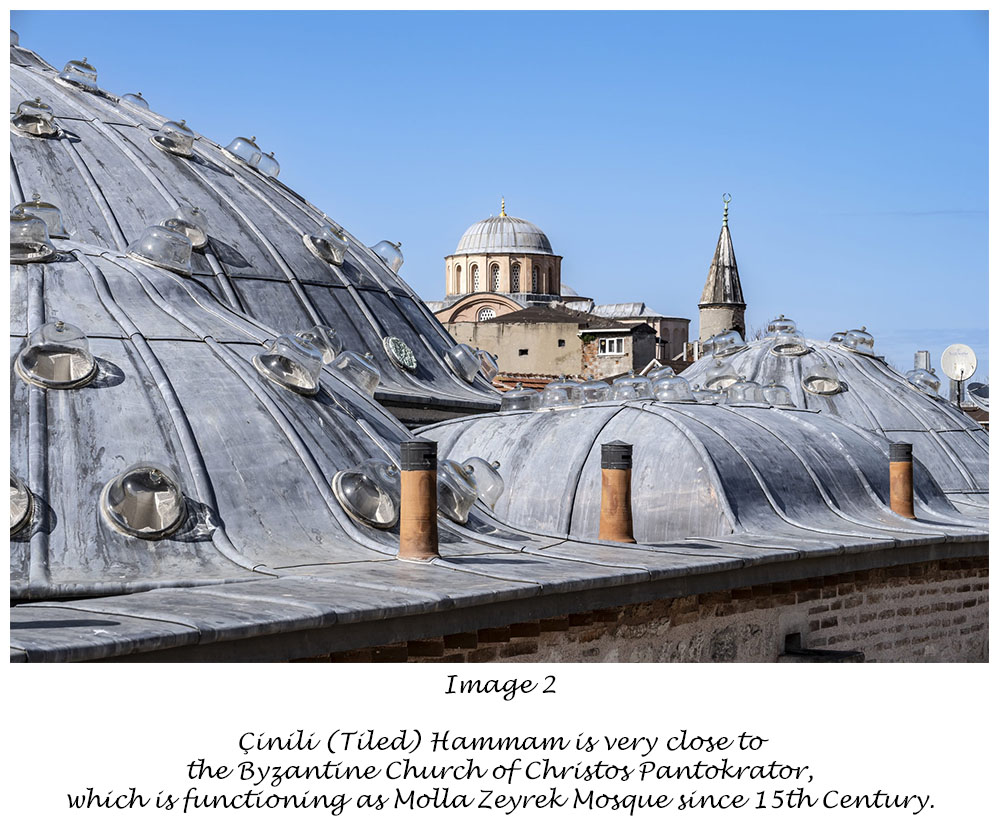
We are looking forward to visit Çinili Hammam during the upcoming Istanbul Biennale, to stroll inside and examine details of one of the most distinguished hammams in Istanbul.
Notes: (1) While acknowledging the existance of abundant number of tiles, academic sources I had read doesn’t specify a number such as 10.000 tiles.
Sources: Daily Sabah
Academic Sources: Latife Aktan: İstanbul’daki Çinili Hamamlar. TDV İslam Ansiklopedisi. Zeynep Emel Ekim: Restorasyon Sonucu Ortaya Çıkan Zeyrek Çinili Hamam Kalemişleri.
 Not To Miss Moments
Leave a comment