
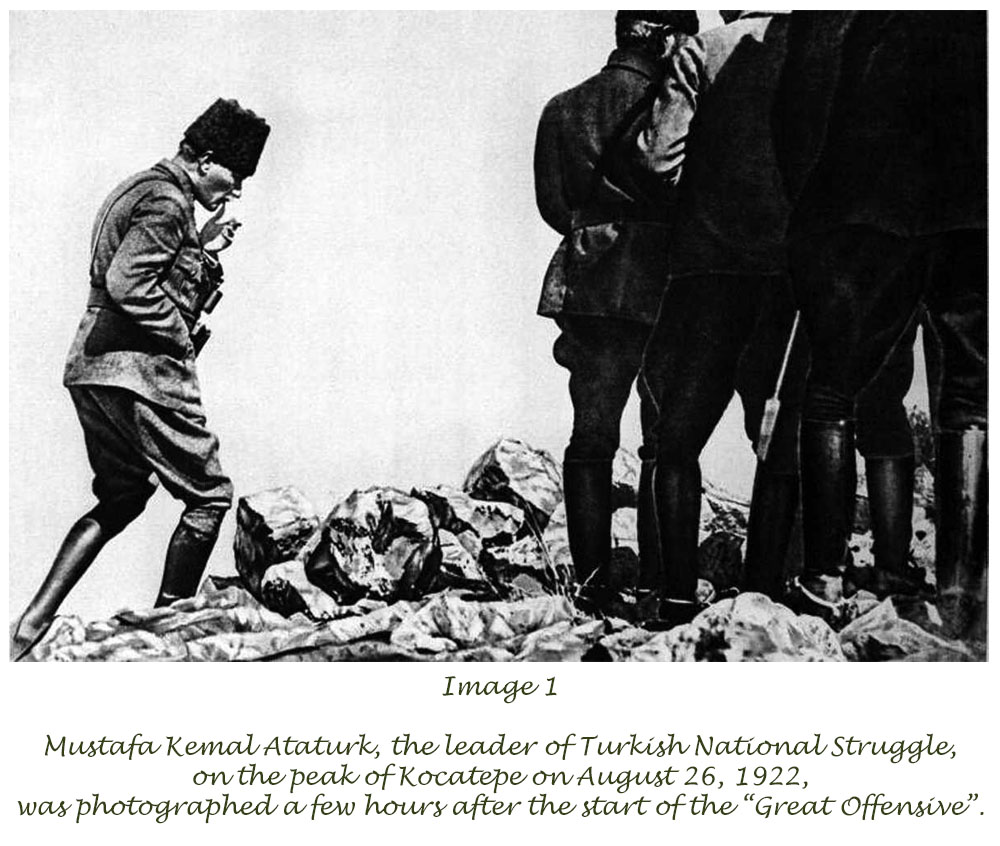
Historical battlefield sites are special places for visitors. Those locations are very emotional places because of the enormous struggle between warring sides. Those locations are places to remember, respect and contemplate. And those are the locations where the course of history changed.
Normany in France; Yorktown in USA and Gallipoli in Turkiye are some of the major spots where the battle is remembered and narrated with the presence of several museums, dozens of memorials, meters-long trenches and statues of various sizes.
Hundred years ago on August 26, on the peak of Kocatepe, something very significant for the Turks happened. As the first sunlight started to brighten the day, Büyük Taarruz, (“Major Charge” or “Great Offensive”) had begun. For this reason, Kocatepe is a location with incomparable significance in the history of Turkiye. It marked the beginning of salvation from an unrestricted occupation, which was imposed on Turks by the winners of the World War 1. The Great Offensive came to a decisive conclusion on August 30, 1922 in the fields of Dumlupinar, but all began in Kocatepe.
With an altitude of 1874 meters, Kocatepe, “the Great Peak” as translated into English, deserves its name. It is the “high ground” overlooking all the other peaks. For this reason, it was chosen as the command centre by Mustafa Kemal Atatürk, who was the leader of Turkish “Milli Mücadele”, the National Struggle. The Great Offensive was so important that he was personally commanding the armies from the front line.
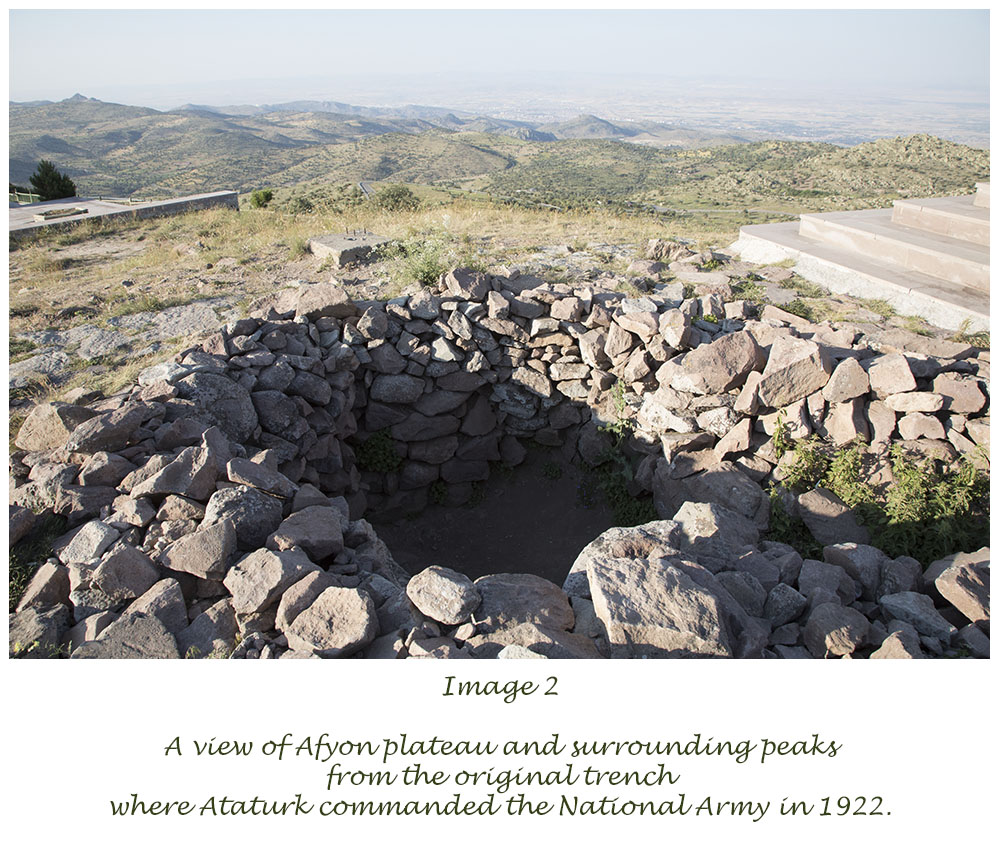
Due to the significantly harsh weather conditions in this peak, Kocatepe is as empty as it once was. In my first attempt to visit it, a swift snowstorm prevented our bus to reach the peak. It was the end of April. In a summer day, I was able to drive up to the top. As I stood there, I was feeling the chilly wind on my body, a wind that swept away the heat of midday sun.
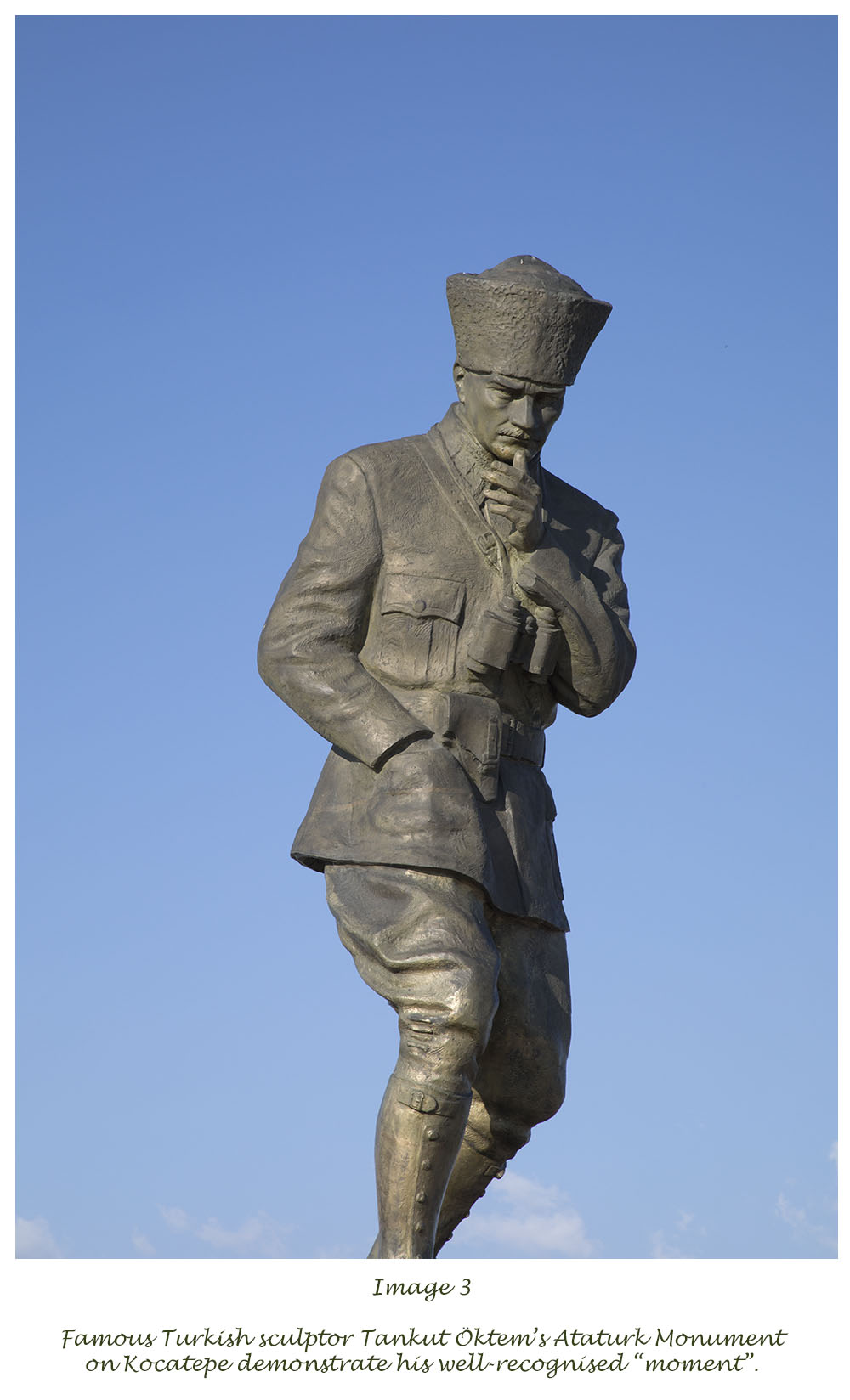
Kocatepe’s main focal spot is the original trench which Ataturk and his command staff once used. In 1953, a humble memorial was placed next to this trench. In 1993, a bronze statue of Ataturk reaching to a height of 7.5 meters (with its pedestal) was placed on the Kocatepe peak. Apart from these memorials, Kocatepe is as empty and harsh as it has always been. But that’s exactly what makes it a great memorial. Its chilly winds, barren vegetation and tiring path is a “living” confirmation of the difficulties that people had to cope with during the Turkish National Struggle. Do uneasy noises of motors of our modern cars, while climbing the steep asphalt road, pay a tribute to oxes, horses and donkeys that carried heavy weaponry? But how can a visitor pay his or her tribute to the women and men who sustained logistical supplies? They were the ones who carried their child on one shoulder, while also carrying all the necessities of soldiers on the other. They were the ones who wore shattered shoes. And some walked without shoes stepping on unforgiving stones. This indomitable spirit of Turkish people is Kocatepe. And Kocatepe, as a solid rock, is a giant monument of the final exertion of Turkish people against occupation.
If you are visiting the city of Afyonkarahisar either in search of recovery in its modern thermal hotels or for a trip to the ancient Phrygian monuments, don’t hesitate to allocate a half day to drive up to the peak of Kocatepe. There you will come across a harsh climate and an endless view: An endless view of surrounding peaks and a glimpse of Afyon plateau. Take your time, imagine yourself being there in the early morning of August 26, 1922. Enter the trench that once hosted Ataturk. Immerse yourself in the moment and place.
Kocatepe, the “Great Peak”, you are a monument in our hearts!
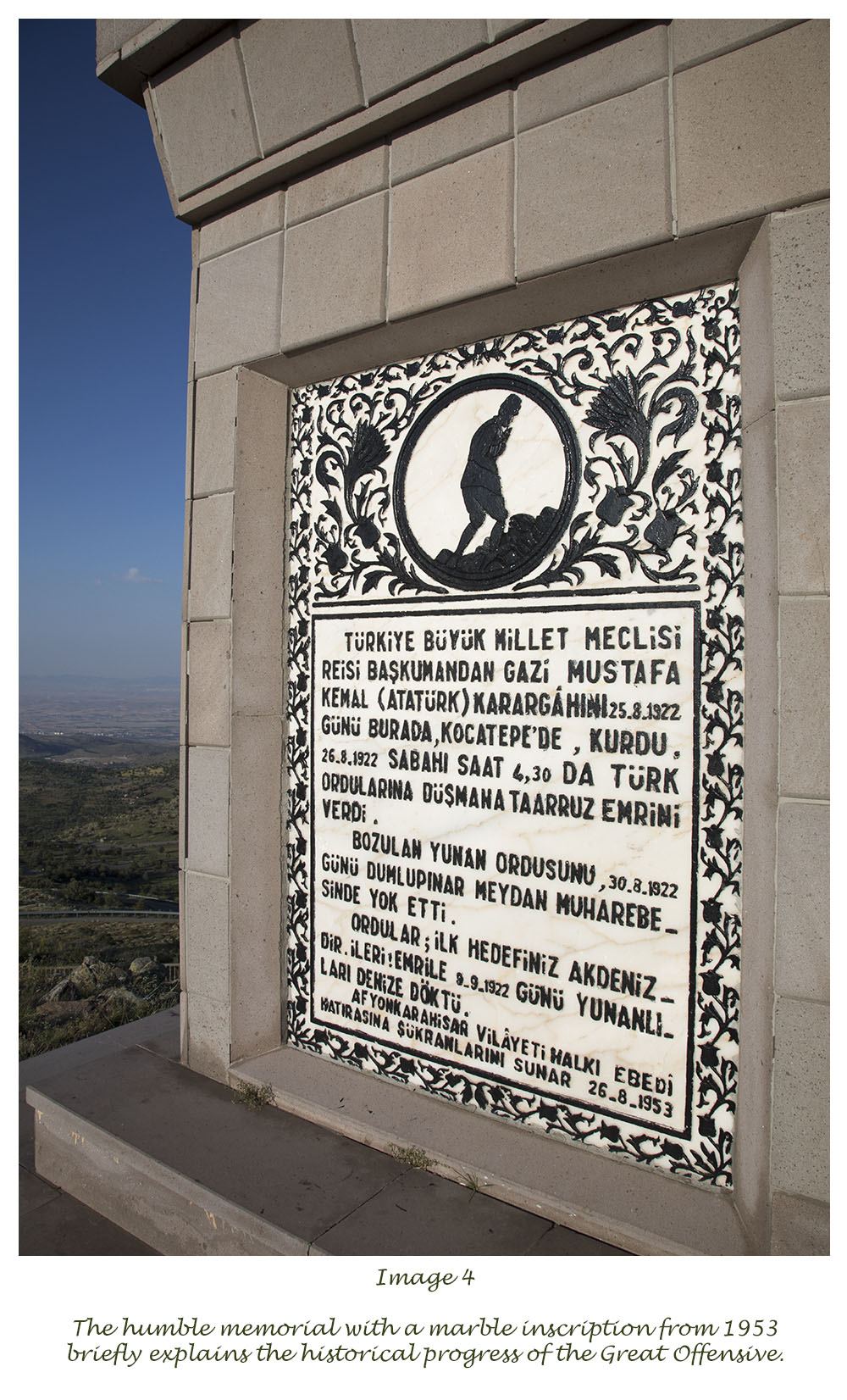
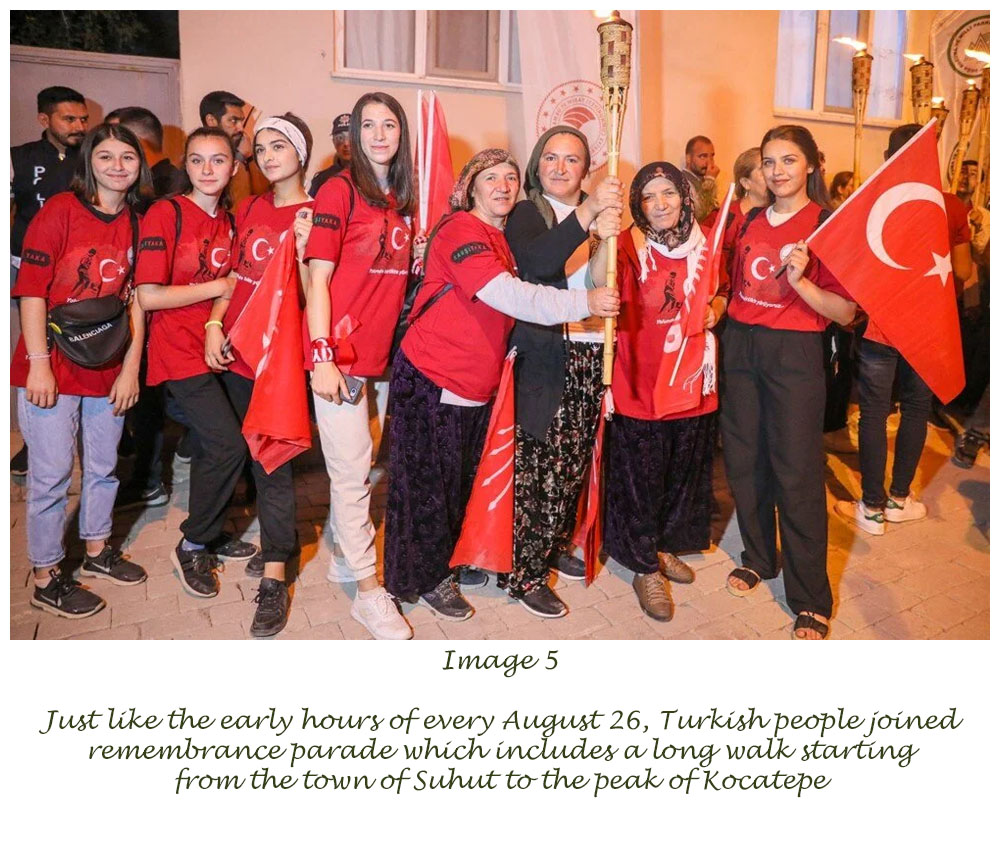
Image Sources: Personal Archive, NTV.com, Wikipedia.
 Not To Miss Moments
Leave a comment